
There is an old assumption buried in the phrase "second hand": that the first owner got the real thing and you are getting what is left. For a long time the market behaved that way too, with poor photography, vague descriptions and no way to judge condition before it arrived.
That has changed faster than most people noticed, and the reason is not sentiment about sustainability. It is that pre-owned finally got good at information.
What actually changed
Three unglamorous things. Condition grading became standardised enough to mean something. Photography got honest, including the scuffs. And returns stopped being a fight, which removed most of the risk from buying something you could not touch first.
Once the information problem was solved, the economics did the rest. A well-made item that has softened slightly with use is often a better proposition than a new one built to a thinner spec at the same price.
Why durability is the quiet variable
The interesting question is rarely new versus used. It is how long the thing lasts. An item worn two hundred times has a very different footprint, and a very different cost per wear, than one worn twice.
The circular economy framing makes this concrete: value is preserved by keeping things in use, not by producing more of them efficiently. For a shopper that translates into something simple. Ask how a thing fails, not just how it looks.
How to judge condition without seeing it
A few habits do most of the work. Read the wear description before the price, because the price only makes sense in that context. Look for photographs of the parts that take stress: seams, soles, hinges, closures, linings. Check whether replacement parts exist, since a repairable item with a worn component is a bargain and an unrepairable one is a risk.
And be honest about the reason you are buying. A piece you will wear weekly justifies patience and a higher standard. A one-occasion item does not, and pretending otherwise is how wardrobes fill up with things nobody chose twice.

Buying less, but deciding better
None of this requires an identity change. It mostly requires slowing the decision down by a day. The counter-force is a storefront engineered to prevent exactly that, which is a design problem we unpack in the attention problem.
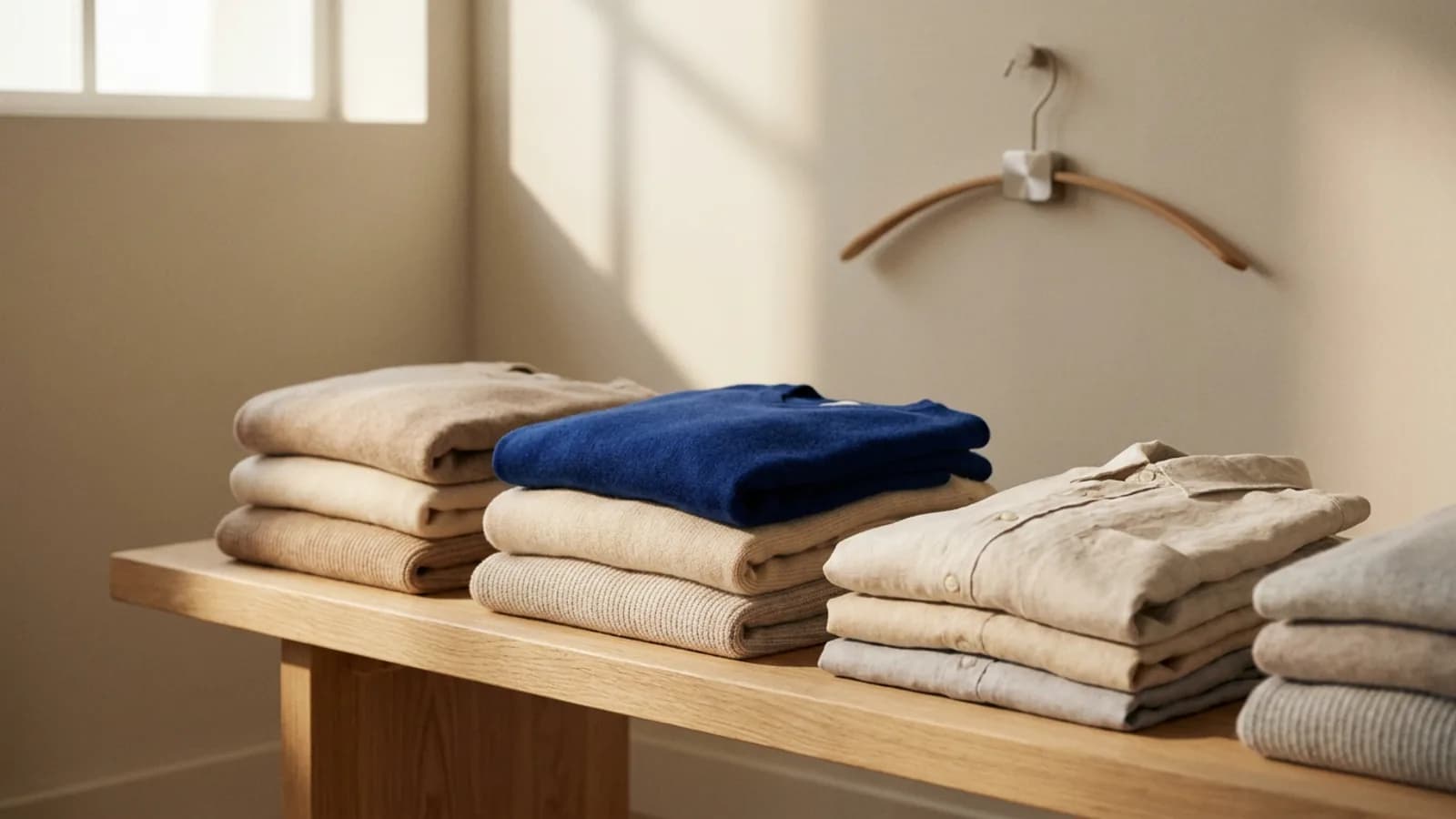
Where it lands practically is in what you choose to keep. Considered wardrobe staples and home pieces reward the slower decision, because they are the things you touch every day and notice when they fail.
The reframe
Pre-loved is not a discount category or a moral position. It is a wider pool of options with better information attached, which is usually how you find something good. Extending the life of what already exists is the most straightforward improvement available, and it also happens to be related to how the industry is rethinking its own future, something we look at through the lens of who clothing is designed for.
Second best was never the right description. It was just the description we had before the photographs got honest.